 Fergus(s)on of Moulin
 Frederick Bradley
(1867 - 1943)
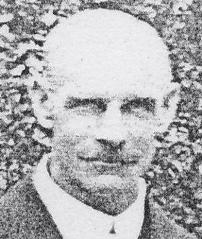
Frederick BRADLEY
(1867-1943)
Wedding day 1915
(1867-1943)
Wedding day 1915
He married Jessie Mary Moodie, daughter of George Hutton Moodie and Janet Harley Hutton, at the home of Jessie Wilson in Dunedin, Otago, on 22 March 1915.1,2,3
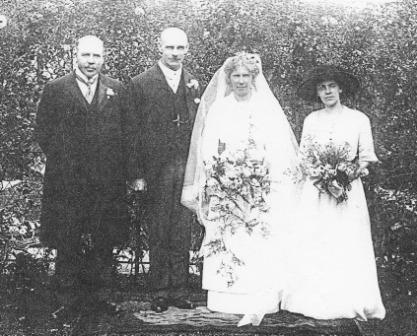
Wedding of Fred BRADLEY to Jessie M MOODIE, March 1915
Frederick died on 6 December 1943 in Dunedin, Otago, at age 76.4,5 He was buried on 16 December 1943 at the Northern Cemetery.6
Family | Jessie Mary Moodie (1877 - 1949) |
| Children |
|
| Charts | Thomas Mudie (Moodie) (1776-?) descendancy |
Copyright © 2011-23 by Don Ferguson. You may copy this information and make derivative works as long as you credit www.fergusontree.com for the original materials.
Citations
- [S421] Presbyterian Church Archives of NZ, at https://www.presbyterian.org.nz/archives/
- [S443] CD - NZ Marriages, CD - NZ Marriages 1836-1956 V2, NZ Registrar General's Folio 1779.
- [S542] Index - New Zealand BDMs online, at https://www.bdmhistoricalrecords.dia.govt.nz/, Marriage Reg. No. 1915/9446.
- [S542] Index - New Zealand BDMs online, at https://www.bdmhistoricalrecords.dia.govt.nz/, Death Reg. No. 1943/25141, aged 76.
- [S420] Dunedin City Cemeteries database, at https://www.dunedin.govt.nz/services/cemeteries/…
- [S420] Dunedin City Cemeteries database, at https://www.dunedin.govt.nz/services/cemeteries/…, Block 161, plot 16, reference N19431205.
Sylvia May Bramley1
(1928 - 2014)
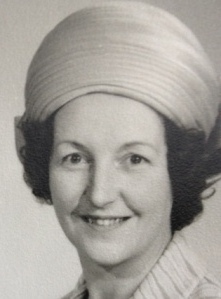
Sylvia May FORSAITH (nee BRAMLEY)(1928-2014) in 1971
Sylvia's marriage to John Rowley Forsaith, son of Alfred Rowley Forsaith and Frances Adelaide Smith, was registered between April 1971 and June 1971 in Bridge, Kent.1,2
She was widowed at age 66 on the death of her husband John on 23 February 1995.3,4
Sylvia died on 13 December 2014 in Henfield, Sussex, at age 86.1
Her will was probated in Brighton, Sussex, on 24 April 2015.5
Family | John Rowley Forsaith (1912 - 1995) |
| Charts | Samuel Forsaith (c1702-1751) descendancy |
Copyright © 2011-23 by Don Ferguson. You may copy this information and make derivative works as long as you credit www.fergusontree.com for the original materials.
Citations
- [S1040] Email - B Hogg, email to D Ferguson, Sep 2015 onwards.
- [S190] Index - GRO and Office of National Statistics, England & Wales Civil Registration Qtrly Indexes, Marriage: District of Bridge, Vol 5f, p191, 2Q1971.
- [S190] Index - GRO and Office of National Statistics, England & Wales Civil Registration Qtrly Indexes, Death: District of Honiton, Register B10S, District 5601B, entry 222.
- [S677] Index - England High Court of Justice, England & Wales National Probate Calendar, probate record 9551308953G, Brighton registry.
- [S677] Index - England High Court of Justice, England & Wales National Probate Calendar, Registry of Brighton, no. 4576987.
Auckland Reeve Branwell1,2
(1871 - 1953)
Auckland Reeve Branwell was born in Camberwell, London, Surrey, on 5 March 1871.2,3
He married Anita Isabelle Fergusson, daughter of John Fergusson and Jessie Muirhead McFarlane, in Westminster, London, Middlesex, on 21 January 1909.4,5
He was listed in the 1911 census as Head of Family at The White House, Strawberry Vale in Twickenham, Middlesex, with his wife Anita; he described himself as an East India merchant, and the household included her three children Kenneth Macfarlane Gaunt, Genifer Mary Butler Gaunt and Betty Muirhead Gaunt plus a cook and housemaid.6
He was widowed on the death of his wife Anita between April 1911 and June 1911.7
He married Adelaide Knox at St Bartholomew's Church in Manhattan, New York, New York, on 19 May 1921. She was the widow of Andre Cheronnet-Champollion, who had been killed in France in 1915, and the daughter of the late John J Knox.8
He was listed in the 1921 census as Head of Family at 'Pipers Croft' in High Wycombe, Buckinghamshire, with his wife Adelaide; he was listed as an East India merchant, employed by Arthur Branwell Co Ltd. His son Michael was listed as living with him.9
He was listed in the 1939 Register at Sowton Borton in St Thomas, Devon; he described himself as a retired East India merchant, and the household included a gardener, housekeeper and servant.3
He was appointed administrator of Michael Reeve Branwell's estate in Llandudno on 18 October 1940.10
Auckland died on 5 July 1953 at 19 Exeter House in Putney Heath, London, Middlesex, at age 82.11,12
His will was probated in London on 10 February 1954 with effects valued at £16,195/14/4.12
He married Anita Isabelle Fergusson, daughter of John Fergusson and Jessie Muirhead McFarlane, in Westminster, London, Middlesex, on 21 January 1909.4,5
He was listed in the 1911 census as Head of Family at The White House, Strawberry Vale in Twickenham, Middlesex, with his wife Anita; he described himself as an East India merchant, and the household included her three children Kenneth Macfarlane Gaunt, Genifer Mary Butler Gaunt and Betty Muirhead Gaunt plus a cook and housemaid.6
He was widowed on the death of his wife Anita between April 1911 and June 1911.7
He married Adelaide Knox at St Bartholomew's Church in Manhattan, New York, New York, on 19 May 1921. She was the widow of Andre Cheronnet-Champollion, who had been killed in France in 1915, and the daughter of the late John J Knox.8
He was listed in the 1921 census as Head of Family at 'Pipers Croft' in High Wycombe, Buckinghamshire, with his wife Adelaide; he was listed as an East India merchant, employed by Arthur Branwell Co Ltd. His son Michael was listed as living with him.9
He was listed in the 1939 Register at Sowton Borton in St Thomas, Devon; he described himself as a retired East India merchant, and the household included a gardener, housekeeper and servant.3
He was appointed administrator of Michael Reeve Branwell's estate in Llandudno on 18 October 1940.10
Auckland died on 5 July 1953 at 19 Exeter House in Putney Heath, London, Middlesex, at age 82.11,12
His will was probated in London on 10 February 1954 with effects valued at £16,195/14/4.12
Family 1 | Anita Isabelle Fergusson (1869 - 1911) |
| Child |
|
Family 2 | Adelaide Knox (1884 - 1941) |
| Charts | Thomas Fergusson (c1758-1844) descendancy |
Copyright © 2011-23 by Don Ferguson. You may copy this information and make derivative works as long as you credit www.fergusontree.com for the original materials.
Citations
- [S467] Family Tree - Dr John Ward, "Family Trees - McGregors by Ward."
- [S190] Index - GRO and Office of National Statistics, England & Wales Civil Registration Qtrly Indexes, Birth: District of Camberwell, Vol 1d, p637, 2Q1871, mother's maiden name JONES.
- [S1044] Census - 29 Sep 1939, UK Register, RG101/6894H/003/20, Letter Code: WICQ, Schedule 16.
- [S468] Family Tree - Daniel A Cooper, "Family Trees - McGregors by Cooper."
- [S190] Index - GRO and Office of National Statistics, England & Wales Civil Registration Qtrly Indexes, Marriage: District of Westminster, Vol 1a, p762, 1Q1909.
- [S687] Census - 2 Apr 1911, UK census, RG14PN6838 RG78PN341 RD128 SD2 ED5 SN20.
- [S190] Index - GRO and Office of National Statistics, England & Wales Civil Registration Qtrly Indexes, Death: District of Hendon, Vol 3a, p157, 2Q1911.
- [S1283] Newspaper - New York Herald, issue of 20 May 1921, Vol LXXXV, No. 263, p9, col5.
- [S1259] Census - 19 Jun 1921, UK census, RG15-7350, RD 145, SD 2, ED 23, Schedule 52.
- [S677] Index - England High Court of Justice, England & Wales National Probate Calendar, administration granted in Llandudno to Auckland Reeve BRANWELL, East India merchant.
- [S190] Index - GRO and Office of National Statistics, England & Wales Civil Registration Qtrly Indexes, Death: District of Wandsworth, Vol 5d, p567.
- [S677] Index - England High Court of Justice, England & Wales National Probate Calendar, probated in London, to the Public Trustee and Patrick Arthur Bronte BRANWELL, company director.
- [S196] Commonwealth War Graves Commission, at https://www.cwgc.org, Marquise Communal Cemetery, Pas de Calais, Plot 1, row A, grave 17.
 Michael Reeve Branwell1
(1911 - 1940)
| Father* | Auckland Reeve Branwell1 b. 1871, d. 1953 |
| Mother* | Anita Isabelle Fergusson1 b. 1869, d. 1911 |
Michael Reeve Branwell was born in Penzance, Cornwall, on 16 April 1911.2,3,4 He was baptised at St Mary, Teddington in Richmond-upon-Thames, Surrey, on 29 July 1911.3
He was listed in the 1921 census at 'Pipers Croft' in High Wycombe, Buckinghamshire, in the household of his father Auckland Reeve Branwell.5
He joined the Royal Navy, passing out as a Cadet on 1 September 1928; was promoted to Sub-Lt in Mar 1932, then became Lieutenant in Mar 1934.6
He was listed in the 1939 Register at the Mayfair Hotel, Berkeley Sq in Westminster, London, Middlesex; his rank was Lieutenant, Royal Navy.4
Michael died on 1 June 1940 in Dunkerque at age 29 aboard his ship, HMS Grive. She was formerly the motor yacht Narcissus (688 tons grt) taken over by the Admiralty in WWI (1915-19) and in WWII (1939-40) and was assisting the British evacuation from Dunkirk. Having made at least 3 successful trips, she suffered in an air raid on 31 May, and then struck a mine when attempting to leave the harbour in the early hours of the next morning.1,7 He was buried at the Marquise Communal Cemetery.1
His will was probated in Llandudno on 18 October 1940 with Auckland Reeve Branwell appointed administrator of effects valued at £99/16/2.8
He was listed in the 1921 census at 'Pipers Croft' in High Wycombe, Buckinghamshire, in the household of his father Auckland Reeve Branwell.5
He joined the Royal Navy, passing out as a Cadet on 1 September 1928; was promoted to Sub-Lt in Mar 1932, then became Lieutenant in Mar 1934.6
He was listed in the 1939 Register at the Mayfair Hotel, Berkeley Sq in Westminster, London, Middlesex; his rank was Lieutenant, Royal Navy.4
Michael died on 1 June 1940 in Dunkerque at age 29 aboard his ship, HMS Grive. She was formerly the motor yacht Narcissus (688 tons grt) taken over by the Admiralty in WWI (1915-19) and in WWII (1939-40) and was assisting the British evacuation from Dunkirk. Having made at least 3 successful trips, she suffered in an air raid on 31 May, and then struck a mine when attempting to leave the harbour in the early hours of the next morning.1,7 He was buried at the Marquise Communal Cemetery.1
His will was probated in Llandudno on 18 October 1940 with Auckland Reeve Branwell appointed administrator of effects valued at £99/16/2.8
| Charts | Thomas Fergusson (c1758-1844) descendancy |
Copyright © 2011-23 by Don Ferguson. You may copy this information and make derivative works as long as you credit www.fergusontree.com for the original materials.
Citations
- [S196] Commonwealth War Graves Commission, at https://www.cwgc.org, Marquise Communal Cemetery, Pas de Calais, Plot 1, row A, grave 17.
- [S190] Index - GRO and Office of National Statistics, England & Wales Civil Registration Qtrly Indexes, Birth: District of Penzance, Vol 5c, p202, 2Q1911, mother's maiden name FERGUSSON.
- [S581] National Archives Film - London Metropolitan Archives, London, England, Church of England Births and Baptisms, 1813-1917.
- [S1044] Census - 29 Sep 1939, UK Register, RG101/635I/006/2, Letter Code: AYOS, Schedule 1.
- [S1259] Census - 19 Jun 1921, UK census, RG15-7350, RD 145, SD 2, ED 23, Schedule 52.
- [S1094] Book - unknown author Navy Lists (Royal Navy) 1888-1970, Feb 1929 (p118a); Jan 1933 (p113); Jul 1934 (p108).
- [S1179] Ship Narcissus website, at https://www.derbysulzers.com/shipnarcissus.html
- [S677] Index - England High Court of Justice, England & Wales National Probate Calendar, administration granted in Llandudno to Auckland Reeve BRANWELL, East India merchant.
James Brechin1
He married Agnes Hood Adam, daughter of William Adam and Agnes Hood, in Kilsyth, Stirlingshire, on 2 October 1835.1
Family | Agnes Hood Adam (1813 - ) |
Copyright © 2011-23 by Don Ferguson. You may copy this information and make derivative works as long as you credit www.fergusontree.com for the original materials.
Citations
- [S917] GRO Scotland, marriage record, Parish of Kilsyth, OPR Marriages, GRO 483/00 0070 391.
Osmond Brehaut
(c 1895 - 1966)
Osmond Brehaut was born circa 1895. (Birth date based on age at death).
He married Elaine le Quesne Lenfestey, daughter of John George Lenfestey and Maria le Quesne.
Osmond died on 4 April 1966 in Channel Islands.1 He was buried at the Churchyard in St Pierre-du-Bois.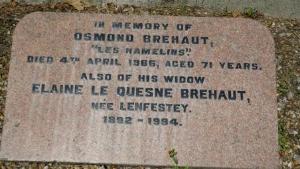
He married Elaine le Quesne Lenfestey, daughter of John George Lenfestey and Maria le Quesne.
Osmond died on 4 April 1966 in Channel Islands.1 He was buried at the Churchyard in St Pierre-du-Bois.
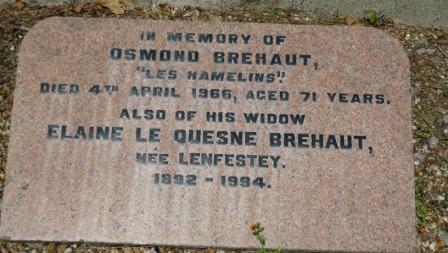
Grave - Osmond BREHAUT (c1895-1966) and his wife Elaine (nee LENFESTEY )(1892-1994), St Pierre du Bois, Guernsey, Channel Islands
Family | Elaine le Quesne Lenfestey (1892 - 1994) |
| Charts | Lenfestey descendant chart Le Quesne descendant chart |
Copyright © 2011-23 by Don Ferguson. You may copy this information and make derivative works as long as you credit www.fergusontree.com for the original materials.
Citations
- [S582] Cemetery Marker - , St Pierre-du-Bois churchyard, Guernsey.
Isabel Bremner
Family | William Cumming |
| Child |
|
Copyright © 2011-23 by Don Ferguson. You may copy this information and make derivative works as long as you credit www.fergusontree.com for the original materials.
Gladys May Brewster1
(1921 - 1991)
Gladys May Brewster was born in Hillhead, Glasgow, Lanarkshire, in 1921.2
She married William Augustus Gray Weston, son of Percival Bernard Weston Wicks and Barbara Jane Frost, at 74 Gordon St in Blythswood, Glasgow, Lanarkshire, on 20 September 1939. He gave his occupation as 'garage proprietor.3'
Gladys died in 1991 in Inverness, Inverness.4
She married William Augustus Gray Weston, son of Percival Bernard Weston Wicks and Barbara Jane Frost, at 74 Gordon St in Blythswood, Glasgow, Lanarkshire, on 20 September 1939. He gave his occupation as 'garage proprietor.3'
Gladys died in 1991 in Inverness, Inverness.4
Family | William Augustus Gray Weston (1917 - 1994) |
| Charts | Wicks descendant chart |
Copyright © 2011-23 by Don Ferguson. You may copy this information and make derivative works as long as you credit www.fergusontree.com for the original materials.
Citations
- [S917] GRO Scotland, marriage record.
- [S612] GRO Scotland, birth/bapt record, District of Hillhead, Statutory Births, GRO 644/12 0196.
- [S917] GRO Scotland, marriage record, District of Blythswood, Statutory Marriages, GRO 644/08 3353.
- [S918] GRO Scotland, death record, District of Inverness, Statutory Deaths, GRO 240/00 0010, aged 69.
Dorothy Maude Brigham1
(1894 - 1948)
Dorothy's birth was registered between July 1894 and September 1894 in Henley, Oxfordshire.1
Dorothy's marriage to Keith Macgregor Fergusson, son of Alexander Macgregor Fergusson and Jessie Amy Baller, was registered between April 1917 and June 1917 in Reading, Berkshire.2
She and her husband Keith left Liverpool on the Empress of France for St John, Newfoundland, but gave their eventual destination as China. He gave his occupation as 'Engineer.3'
Dorothy arrived in London on 15 September 1921 on the Syria from Singapore, giving a last country of permanent residence as FMS (Federation of Malay States) and returned to Penang on the Macedonia, leaving London on the 4 Aug 1922 accompanied by her child Bruce. As he was aged 1 on the first trip, we presume he was born in the Malay States.4,3
She and her husband Keith left Penang for Pymouth on the Naldera, which arrived in London on the 25 April 1924, accompanied by their child Bruce.5
In 1928 Dorothy petitioned Keith Macgregor Fergusson for divorce.6
Dorothy died on 20 January 1948 in Reading, Berkshire.7,8
Her will was probated in London on 25 March 1948 with her estate valued at £3750/15/11. She was recorded as a 'single woman', so presumably did not re-marry after her divorce.8
Dorothy's marriage to Keith Macgregor Fergusson, son of Alexander Macgregor Fergusson and Jessie Amy Baller, was registered between April 1917 and June 1917 in Reading, Berkshire.2
She and her husband Keith left Liverpool on the Empress of France for St John, Newfoundland, but gave their eventual destination as China. He gave his occupation as 'Engineer.3'
Dorothy arrived in London on 15 September 1921 on the Syria from Singapore, giving a last country of permanent residence as FMS (Federation of Malay States) and returned to Penang on the Macedonia, leaving London on the 4 Aug 1922 accompanied by her child Bruce. As he was aged 1 on the first trip, we presume he was born in the Malay States.4,3
She and her husband Keith left Penang for Pymouth on the Naldera, which arrived in London on the 25 April 1924, accompanied by their child Bruce.5
In 1928 Dorothy petitioned Keith Macgregor Fergusson for divorce.6
Dorothy died on 20 January 1948 in Reading, Berkshire.7,8
Her will was probated in London on 25 March 1948 with her estate valued at £3750/15/11. She was recorded as a 'single woman', so presumably did not re-marry after her divorce.8
Family | Keith Macgregor Fergusson (1887 - 1951) |
| Child |
|
| Charts | Thomas Fergusson (c1758-1844) descendancy |
Copyright © 2011-23 by Don Ferguson. You may copy this information and make derivative works as long as you credit www.fergusontree.com for the original materials.
Citations
- [S190] Index - GRO and Office of National Statistics, England & Wales Civil Registration Qtrly Indexes, Birth: District of Henley, Vol 3a, p764, 3Q1894, mother's maiden name SIMPSON.
- [S190] Index - GRO and Office of National Statistics, England & Wales Civil Registration Qtrly Indexes, Marriage: District of Reading, Vol 2c, p662, 2Q1917.
- [S729] Passengers leaving UK, 1890-1960, at https://www.findmypast.co.uk
- [S720] UK Incoming Passenger Lists, 1878-1960, at https://www.ancestry.com
- [S720] UK Incoming Passenger Lists, 1878-1960, at https://www.ancestry.com, (listed under surname FERGUSON).
- [S541] National Archives of Britain, at https://www.nationalarchives.gov.uk, Supreme Court of Judicature, 1928, Ref. J77/2595/676, wife's petition for divorce.
- [S190] Index - GRO and Office of National Statistics, England & Wales Civil Registration Qtrly Indexes, Death: District of Reading, Vol 6a, p71, 1Q1948, aged 62.
- [S677] Index - England High Court of Justice, England & Wales National Probate Calendar, probate recorded at London registry with administration granted to Rose Maude Brigham, widow (her mother).
- [S196] Commonwealth War Graves Commission, at https://www.cwgc.org
Elizabeth Brimner1
(1875 - 1937)
Elizabeth Brimner was born in Onehunga on 21 December 1875.2
She married Thomas Alexander Saunders at Wesleyan Church in Palmerston North on 27 December 1900. At the time of his marriage, Thomas was living at Mangaweka working on the Mangaweka Viaduct on the North Island Main Trunk railway line. The marriage certificate also states he was born in North Shields, England, which contradicts his birth information.1,3,4
Elizabeth died on 16 February 1937 in New Zealand at age 61.1,5 She was buried at the Hillsborough Cemetery.1
She married Thomas Alexander Saunders at Wesleyan Church in Palmerston North on 27 December 1900. At the time of his marriage, Thomas was living at Mangaweka working on the Mangaweka Viaduct on the North Island Main Trunk railway line. The marriage certificate also states he was born in North Shields, England, which contradicts his birth information.1,3,4
Elizabeth died on 16 February 1937 in New Zealand at age 61.1,5 She was buried at the Hillsborough Cemetery.1
Family | Thomas Alexander Saunders (1869 - 1944) |
| Child |
|
Copyright © 2011-23 by Don Ferguson. You may copy this information and make derivative works as long as you credit www.fergusontree.com for the original materials.
Citations
- [S312] Electronic Files - A Robinson, and subsequent correspondence.
- [S312] Electronic Files - A Robinson, and subsequent correspondence, Possibly born in 1876 according to Marion Coyle.
- [S443] CD - NZ Marriages, CD - NZ Marriages 1836-1956 V2, NZ Registrar General's Folio 4644.
- [S542] Index - New Zealand BDMs online, at https://www.bdmhistoricalrecords.dia.govt.nz/, Marriage Reg. No. 1900/4783.
- [S542] Index - New Zealand BDMs online, at https://www.bdmhistoricalrecords.dia.govt.nz/, Death Reg. No. 1937/19465, aged 61.